Setting Signatures within Mail
Written by Eric Wyatt (last updated September 3, 2018)
Often when using email, it is helpful to add an email signature. An email signature is a block of information added to the bottom of any outgoing email. Typically email signatures are setup to provide information that the sender believes the recipient will benefit from having. In Mail adding an email signature is a simple process.
- With the Mail app open, click the Settings icon (it looks like a small gear) in the left-most column. The Mail app displays the Settings menu on the right side of the Mail app.
- Click on Signature in the Settings Menu. Mail displays the Email Signature window. (See Figure 1.)
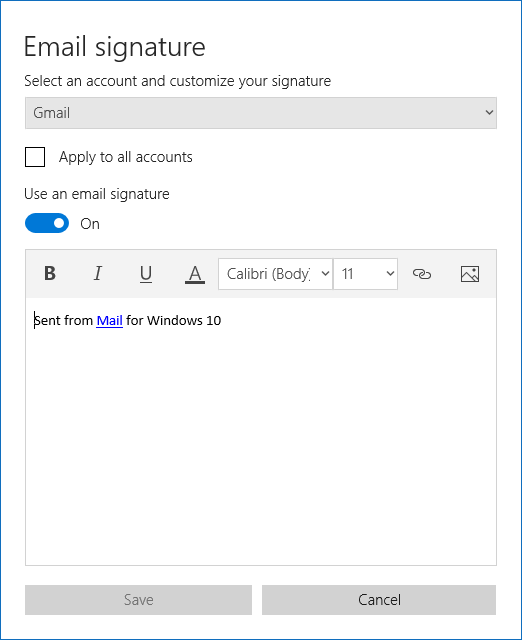
Figure 1. Mail app Email Signature window with default signature.
- Specify which account you want the signature used for. (This only has bearing if you are using multiple email accounts. If you want the signature used for all of your multiple accounts, then you can click the Apply to All Accounts check box.)
- Enter the information you want to include in your email signature. (See Figure 2.)
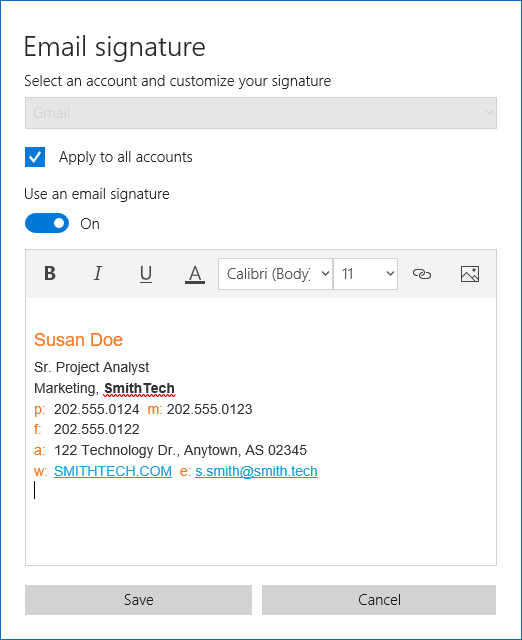
Figure 2. Mail app Email Signature window with new signature.
- Click Save.
Email signatures can include HTML elements, such as hyperlinks, formatting, and images. If you need to, you can use another program or online resource to create your email signature. If you use another program or online service, you can copy the information and paste it into the Email Signature window.
 This tip (1269) applies to Windows 10.
Author Bio
Eric Wyatt
Eric Wyatt is a swell guy (or so his friends tell him). He is a formally trained designer and branding expert, bringing a wide range of skills to his Tips.Net articles. Learn more about Eric...
Personalizing the Mail App
The Mail app found in Windows 10 allows for a personalized experience. Discover the personalization that you can quickly ...
Discover More
Disabling the Windows 10 Blurred Sign-on Screen
The later updates to Windows 10 introduced blurred background images on the sign-in screen. If you prefer to have the ...
Discover More
Counting Files and Subfolders Using the Command Prompt
There are times when you might need to know how many files or subfolders are in a folder. Using the command prompt, you ...
Discover More
Getting Started with the Mail App
The Mail app is a great way to access your e-mail. This tip shows you how to get started quickly and easily.
Discover More
Using the Snipping Tool
Being able to capture portions of the screen can come in handy for a wide variety of reasons. The Windows snipping tool ...
Discover More
Keeping Track of Time with Timers
Often it is necessary to be notified when a set amount of time has gone by. With the Timer tab of the Alarms & Clock app ...
Discover More

Comments