Creating a Flip 3D Taskbar Shortcut
Assuming you are using one of the Aero interfaces available in Windows, you can use Flip 3D to easily switch between windows. (Just hold down the Windows key and press the Tab key at the same time.) Depending on how you use Windows, you may want to create a taskbar shortcut that invokes Flip 3D. You can do that by following these steps:
- Right-click anyplace on the desktop. Windows displays a Context menu.
- Choose New | Shortcut. Windows displays Create Shortcut dialog box. (See Figure 1.)
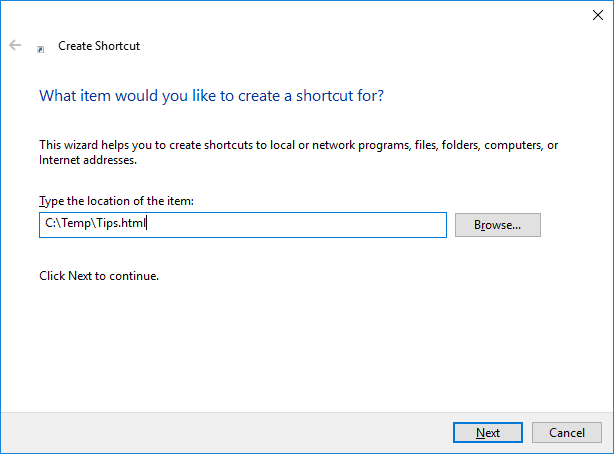
Figure 1. The Create Shortcut dialog box.
- In the Type the Location of the Item field enter the following:
c:\windows\system32\rundll32.exe DwmApi #105
- Click Next.
- Give the shortcut a descriptive name, such as Flip 3D.
- Click Finish. Windows creates the shortcut on the desktop.
- If desired, change the icon image to something else.
- Drag the new shortcut to the taskbar and pin it there.
- If desired, delete the shortcut from the desktop. (You probably don't need it since you pinned a copy to the taskbar.)
To use the shortcut, just click it and Windows displays the Flip 3D interface on the screen.

 This tip (3603) applies to Windows 7 and 10.
Author Bio
Allen Wyatt
With more than 50 non-fiction books and numerous magazine articles to his credit, Allen Wyatt is an internationally recognized author. He is president of Sharon Parq Associates, a computer and publishing services company. Learn more about Allen...
Hiding Grammar Errors
Are you bothered by the green underlines that Word uses to mark potential grammar errors in your document? You can hide ...
Discover More
Closing a Read-Only Workbook
When you create a workbook that is read-only, users can still make changes to the workbook. When they exit, they are ...
Discover More
Overriding Automatic Numbering of Tables
Word lets you add automatic numbering to different elements of your document. It does not, however, allow much ...
Discover More
Choosing an Icon Size for the Taskbar
Choosing an icon size for the taskbar is a quick and simple process. This tip explains how it's done.
Discover More
Displaying the Start Menu Using the Keyboard
Need to get to the Start menu, but hate taking your hands off the keyboard? Here are two quick ways you can display the ...
Discover More
Adding the Day of the Week to the Taskbar Clock
Sometimes it is helpful to know the day of the week. How do you get the taskbar clock to show the day of the week?
Discover More


Comments