Changing the Default Desktop Icons
Windows, by default, displays only the Recycle Bin icon on your desktop. You can, if you desire, instruct Windows to display a number of other icons as well. Follow these steps if you are using a Windows 10 system:
- Click the Start button (the Windows icon) and then select Settings icon (looks like a small gear). Windows displays the Windows Settings screen.
- Choose Personalize. Windows displays the Personalization window.
- Click the Themes link from the list on the left side of the window. Windows displays the Themes window.
- Scroll down to the Related Settings group and click on the Desktop Icon Settings link. Windows displays the Desktop Icon Settings dialog box. (See Figure 1.)
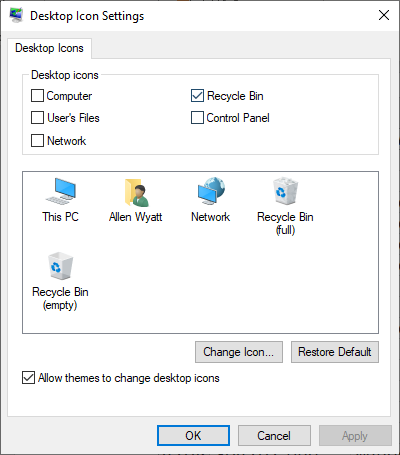
Figure 1. The Desktop Icon Settings dialog box.
- At the top of the dialog box, make sure a check mark appears beside each icon you want displayed on your desktop.
- Click OK.
If you are using a Windows 7 or Windows 8 system, follow these steps:
- Right-click at some empty point on your desktop. Windows displays a Context menu.
- Choose Personalize from the Context menu. Windows displays the Personalize dialog box.
- Click the Change Desktop Icons link, near the upper-left of the dialog box. Windows displays the Desktop Icon Settings dialog box.
- At the top of the dialog box, make sure a check mark appears beside each icon you want displayed on your desktop.
- Click OK.
The icons you selected should now be visible on the screen, along with all the others you have.
Author Bio
Allen Wyatt
With more than 50 non-fiction books and numerous magazine articles to his credit, Allen Wyatt is an internationally recognized author. He is president of Sharon Parq Associates, a computer and publishing services company. Learn more about Allen...
Comment Dates Updated Inappropriately
Using the comment capabilities of Word is a common occurrence when developing a document. What do you do, however, if the ...
Discover More
Formatting Text in Custom Document Properties
Word allows you to create custom document properties that stay with a document and can be inserted through the use of ...
Discover More
Automatically Saving Changes to Defaults
Have you ever started a new document only to find that the settings in Word seem to be different than what you expected? ...
Discover More
Adjusting Speaker Volume
Adjusting your computer's speaker volume is a quick process. Windows gives you simple access to the overall volume level ...
Discover More
Understanding Windows Defender
There are a myriad of computer viruses always looking for new systems to infect. You can mitigate your risk of being ...
Discover More
Differences between Hibernate and Sleep
If you want to conserve energy or preserve your laptop's battery life, you should know about hibernate and sleep. There ...
Discover More



 This tip (10958) applies to Windows 7, 8, and 10.
Comments