
File Explorer's SendTo menu item is common to anyone who's been using Windows for any length of time. Right-click a file name, and there's SendTo waiting to do your bidding. (See Figure 1.)
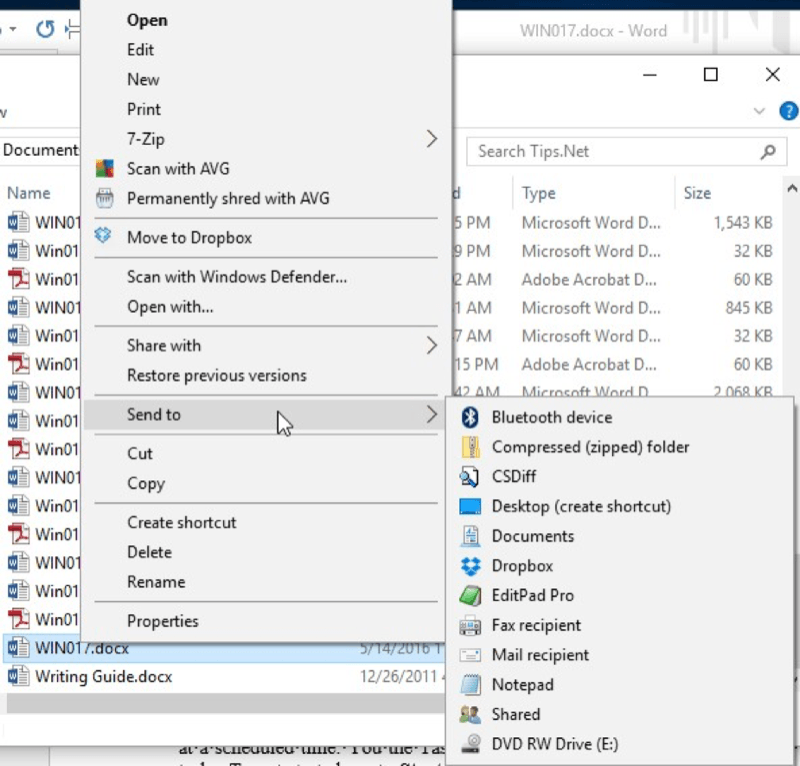
Figure 1. The SendTo menu.
I like to put "Notepad" in my SendTo menu so that I can open any type of file in Notepad simply by right-clicking the file, but you can easily configure SendTo to send a file or folder to any application.
Probably the easiest way to customize SendTo is to create a shortcut to the application that you want to be the target of the SendTo and move that shortcut to SendTo's folder. SendTo's folder can be opened from File Explorer. Just go to File Explorer's address bar and type (without quotes) "shell:SendTo" and press Enter. You'll be taken to a folder that looks something like this: (See Figure 2.)
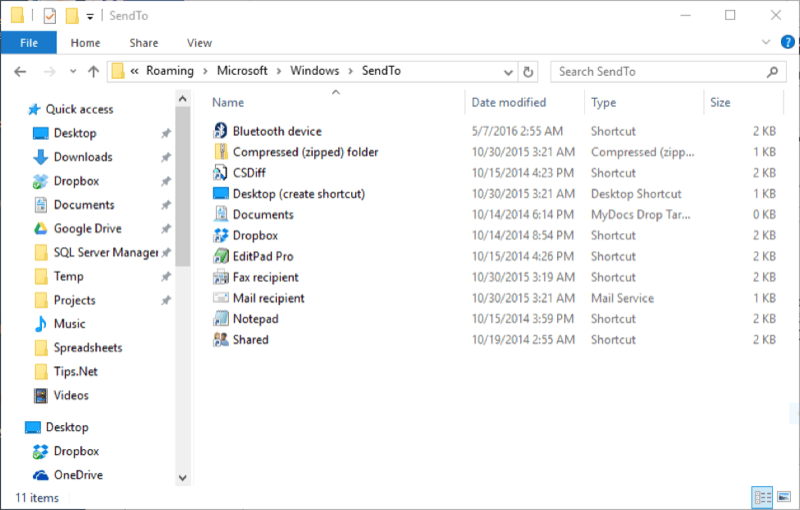
Figure 2. The SendTo folder.
Moving your shortcut to this folder is all that's required to add a new application to the SendTo menu. (Notice that my folder contains, among other things, a shortcut to Notepad.) Similarly, if you want to remove something from SendTo, just delete the shortcut from this folder. (Note that there are some items in the SendTo folder that aren't shortcuts. It is recommended that you not delete these items.)
 This tip (13448) applies to Windows 10.
The Num Lock key controls how your numeric keypad behaves and, possibly, a few other behaviors. Here's how to adjust ...
Discover MoreWhen you set an image for your wallpaper Windows 10 compresses the quality of the image. You can improve the quality of ...
Discover MoreIf you don't like the name that was assigned to your computer when it was put together, it's pretty easy to change. This ...
Discover MoreThere are currently no comments for this tip. (Be the first to leave your comment—just use the simple form above!)
Copyright © 2026 Sharon Parq Associates, Inc.

Comments