
Easily Running a Program as the Administrator

Written by Allen Wyatt (last updated July 1, 2019)

When you run a program in Windows, that program is run using whatever user account you used when you logged in to the system. For instance, if I log in using an account named AWyatt, then any programs I run while logged in are executed using whatever security setting and environmental configuration I devised for the AWyatt account.

For some programs, though, you may need a greater level of access to the system. In fact, some programs—particularly those that may access or change system settings—can only be run by an administrator. Fortunately, it is not difficult to run a program as an administrator, regardless of what account I am currently using on the system.

To run a program as an administrator, simply right-click on the program's icon or menu link. You should see a Context menu. (See Figure 1.)
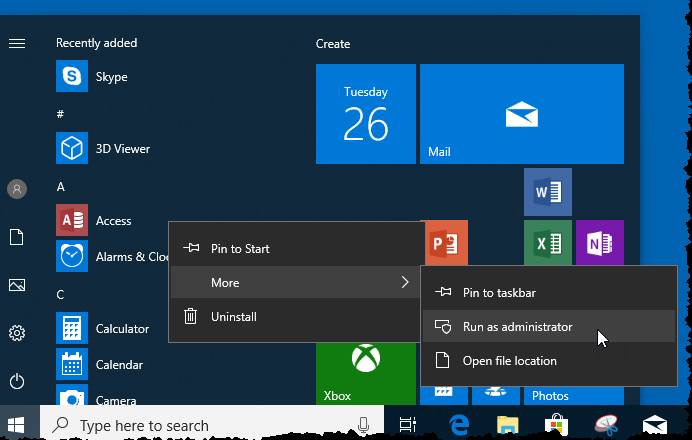
Figure 1. An example Context menu displayed when right-clicking.

Note the option to "Run as Administrator." If you choose this option, then the program is run using administrator rights. If you don't see the "Run as Administrator" option on the Context menu, it may mean one of three things:

  • The program doesn't require administrator rights in order to run properly.
  • You are already logged in as an administrator (which means that the program is run "as administrator" by default).
  • The program is somehow blocked by Windows from running with admin privileges.

 This tip (10138) applies to Windows 7, 8, and 10.

Author Bio

Allen Wyatt

With more than 50 non-fiction books and numerous magazine articles to his credit, Allen Wyatt is an internationally recognized author. He is president of Sharon Parq Associates, a computer and publishing services company. ...

MORE FROM ALLEN

Creating Unnumbered Endnotes

Endnotes are indispensable in some types of writing. You may want to create endnotes, however, that don't follow the ...

Discover More

Differences between Deleting, Clearing, and Cutting

When getting rid of text from your document, Word allows you to delete, clear, or cut. Here are the differences between ...

Discover More

Formatting Text in Comment Boxes

Want to make your worksheet comments appear a certain way? It's easy to do using techniques you are already familiar with.

Discover More
More WindowsTips

Understanding Windows SIDs

This tip presents some information about Windows SIDs (Security Identifiers) and shows you some tools that you can use to ...

Discover More

Logging In with Local vs. Microsoft Credentials

In Windows 10, you can choose to login using your local account or by using your Microsoft credentials. How to switch ...

Discover More

Understanding Action Center

Action Center provides you with a quick overview of security and maintenance issues and allows you to drill down to the ...

Discover More
Comments

If you would like to add an image to your comment (not an avatar, but an image to help in making the point of your comment), include the characters [{fig}] (all 7 characters, in the sequence shown) in your comment text. You’ll be prompted to upload your image when you submit the comment. Maximum image size is 6Mpixels. Images larger than 600px wide or 1000px tall will be reduced. Up to three images may be included in a comment. All images are subject to review. Commenting privileges may be curtailed if inappropriate images are posted.

What is one less than 7?

There are currently no comments for this tip. (Be the first to leave your comment—just use the simple form above!)


Newest Tips